
A Practical Approach to Valve Timing on M Series Engines
The “Red Book” tells us to check valve timing at 53 and 52 thou tappet clearances and feel for the pushrod nipping up to identify the crank angle.
One problem with that is that on some older engines, especially if the valves are heading towards pocketing, you cannot achieve those checking clearances on the tappet adjusters. Secondly it is assuming the engine is built up. Both require that Top Dead Centre (TDC) has been accurately determined and a timing disc and pointer attached.
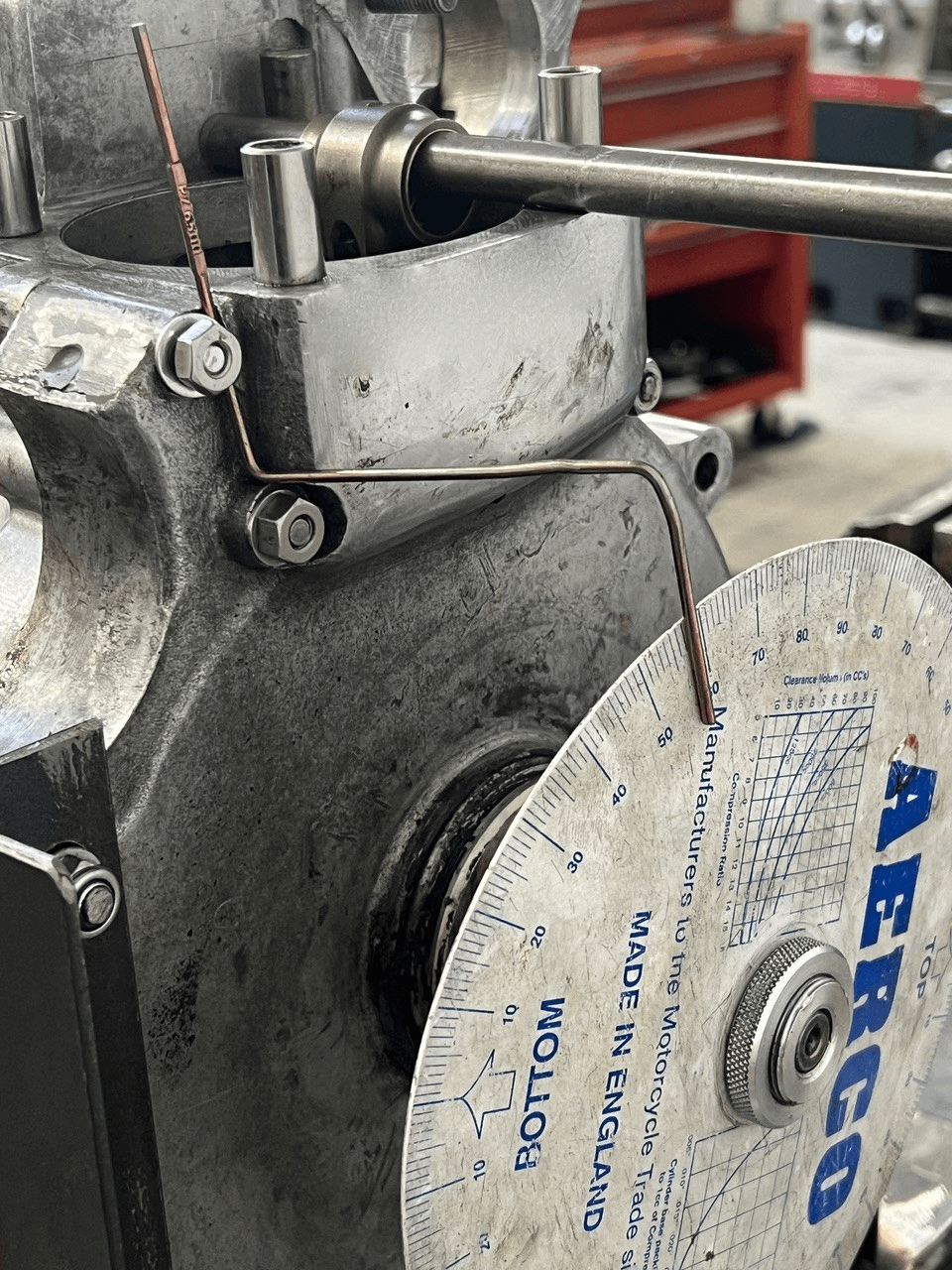
Taking the last point first. If I am building an engine, I set the valve timing with the barrel off. I fit a timing disc, using one of our adapters, and a length of welding wire to the top crankcase stud, to use as a pointer. I determine Bottom Dead Centre (BDC) by passing a short length of rod through the small end and rotating the crank until the rod contacts the crankcase mouth, both forwards and backwards . By noting the reading on the timing disc it can be adjusted to equalise the readings fore and aft and therefore BDC. I mount a dial gauge (DTI) on a piece of plate, bolted to the stud adapters and set the plunger into the inlet cam follower pushrod cup with the follower on the base circle of the cam.
It is sensible to align the timing marks (if there are any) on the valve train gears as a starting point. Next rotate the crank in a forwards direction until the DTI shows 53 thou and check the angle on the timing disc (45 deg before TDC on an M17/8). If it is not correct move the cam gear to get it as close as possible. Next rotate the crank backwards until the reading is less than 53 thou and carefully bring it to that point in a forwards direction. That is the inlet closing reading and should be 55 deg after BDC. You may well find neither is spot on so position the cam for the best compromise.
The exhaust timings can be checked in a similar way on the other cam follower, using 52 thou, but since this is determined by the camshaft itself I focus on getting the inlet settings as close as possible.
There is currently unresolved debate as to what the settings should be if Thruxton 1.25” rad followers are used and the Red Book does not help.
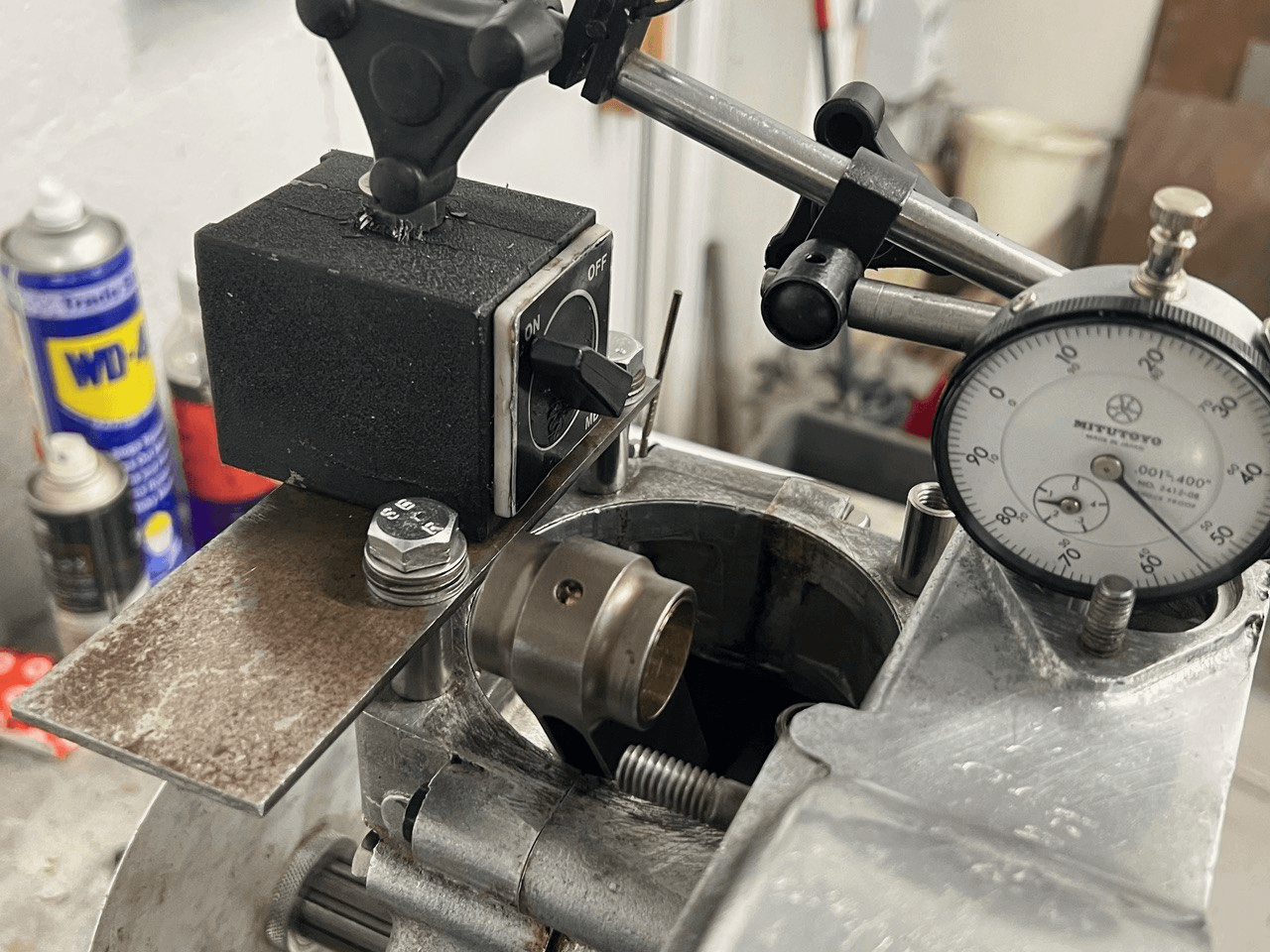
On other occasions you may wish to check the valve timing of an engine in the frame. This can be achieved by a similar method applied differently.
Firstly fit a timing disc and pointer as above and find TDC using either the dead stop method with a fixture in the plug hole or, as I do with a DTI in an adapter in the plug hole.
Gain access to thee tappets by removing the tapper cover.
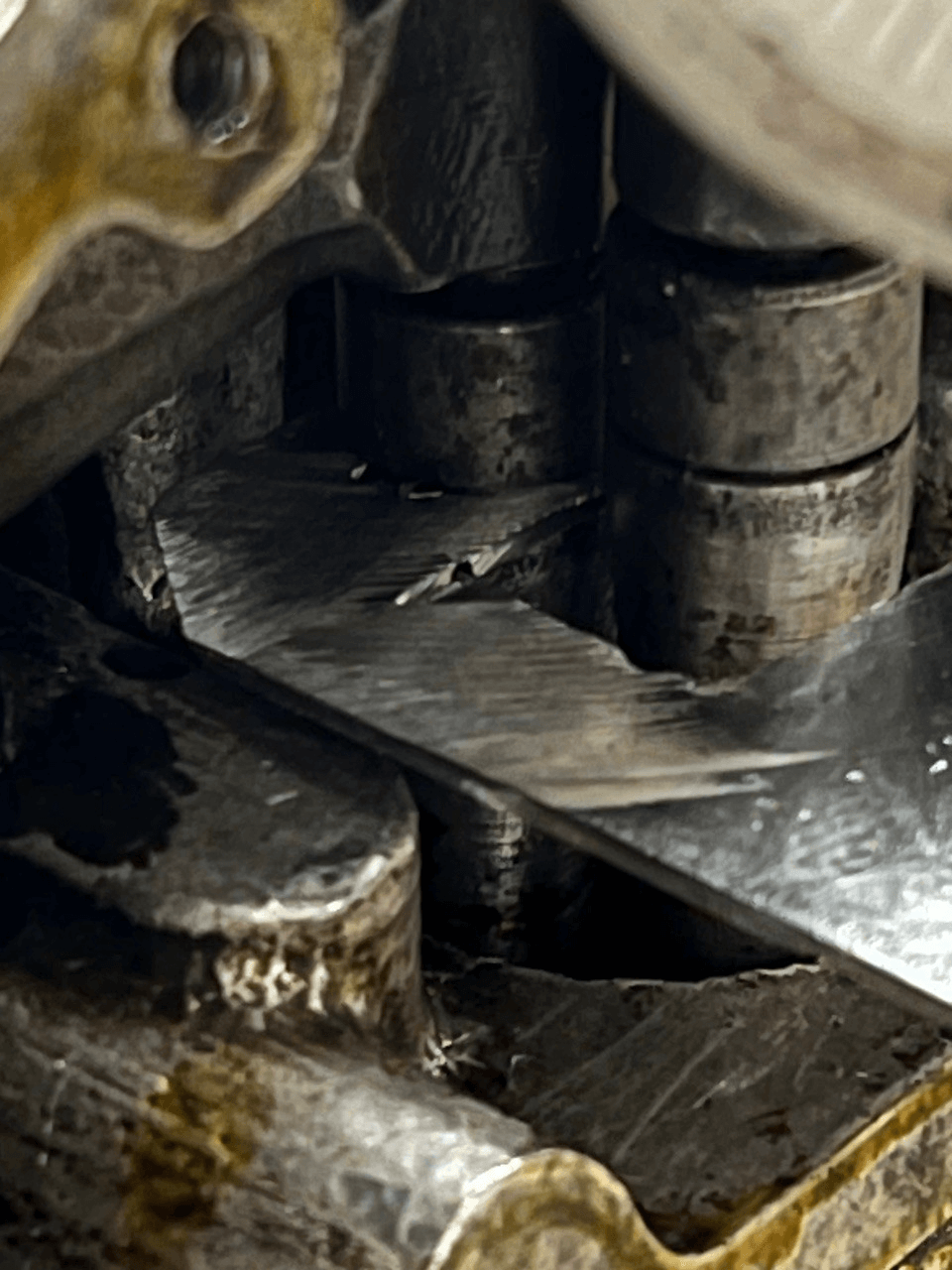
I made a small length of spring steel (in my case a Wassel horn bracket) with a cutout to clear the exhaust pushrod and trap it under other inlet pushrod cap with the cam on the base circle (sorry its a bit rough :-) ). It doesn’t matter if the valve lifts a fraction as we are measuring from the cam side.
Mount the DTI on (the same) plate, this time under a rocker box bolt and then continue as above to check the inlet timing.
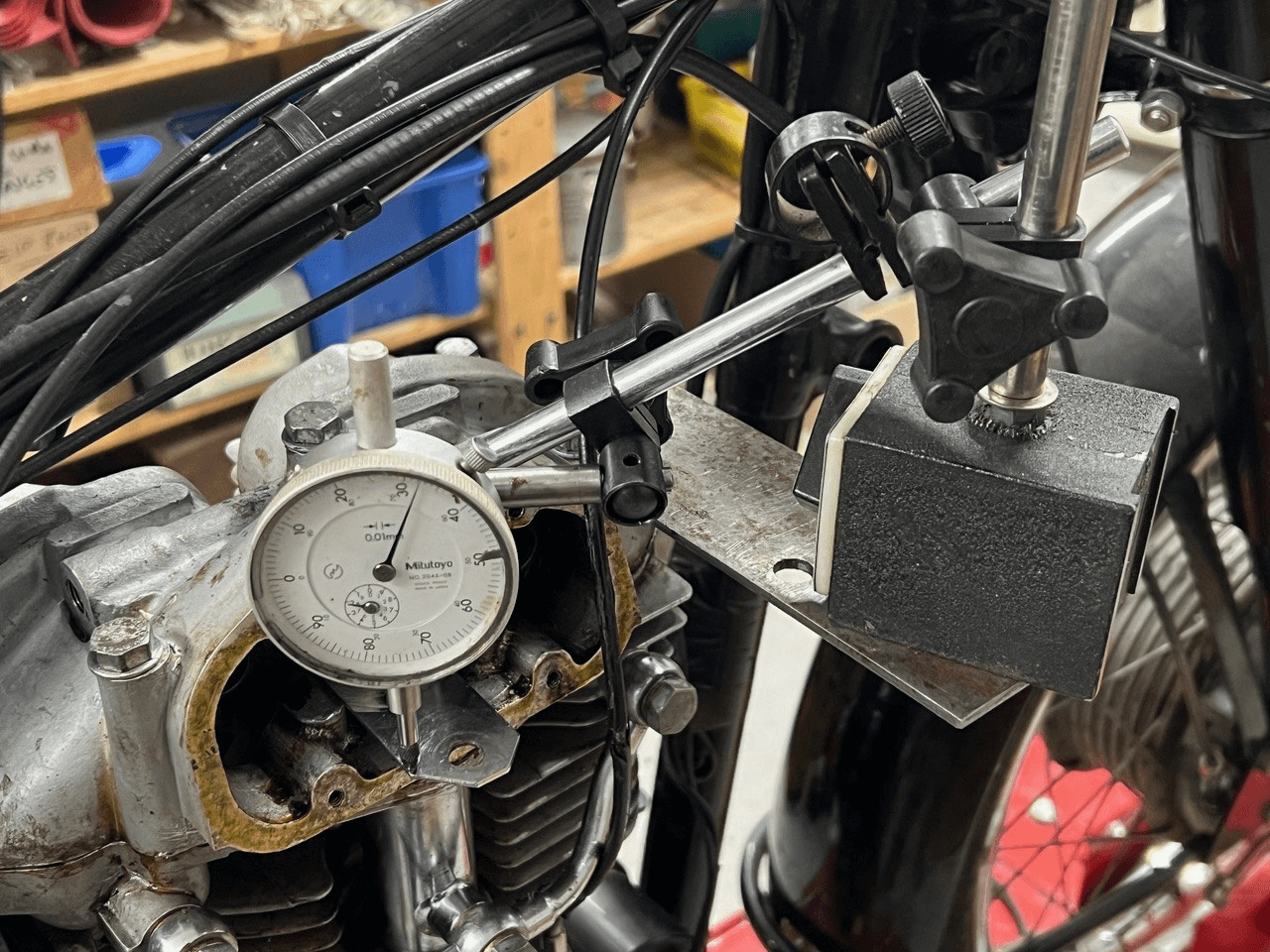
Don’t be confused with that metric DTI, aiming for 1.35mm
This method is quite handy on occasions as there is no need to remove the exhaust pipe or timing cover, but still achieves accuracy.
